Imprint
- 2026
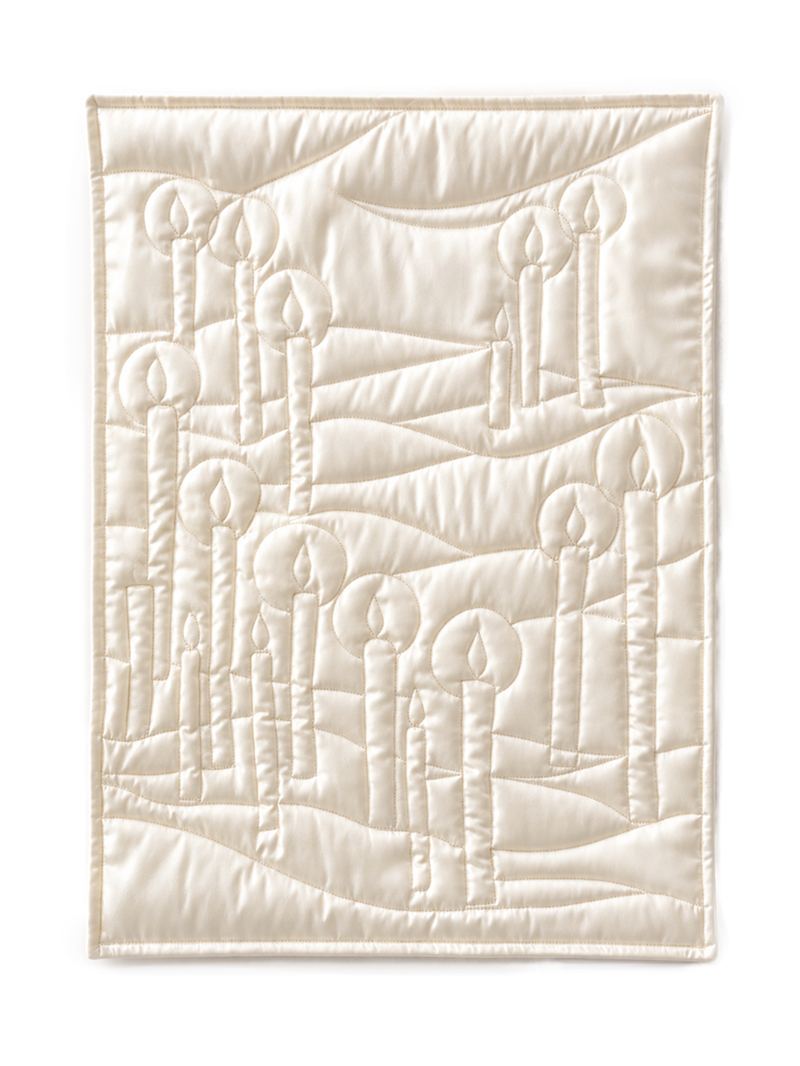
- 60 × 80 cm
- Quilted textile, stitched and padded surface
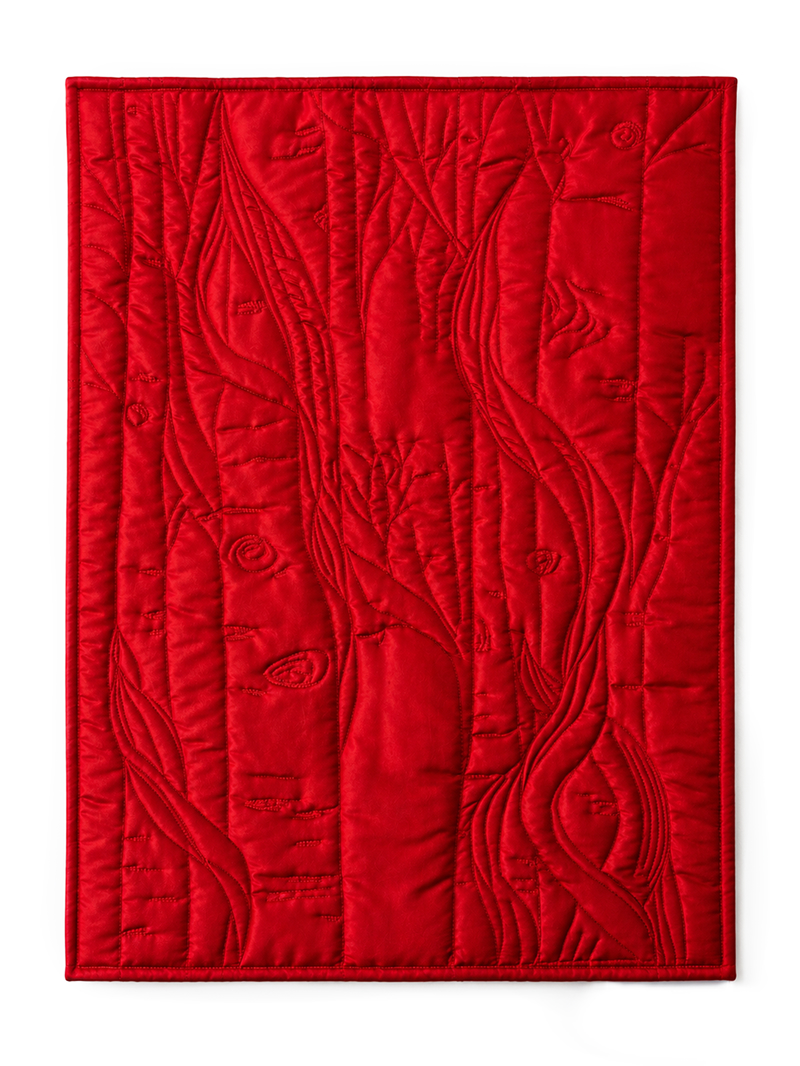
Assembled in Red approaches memory not as a narrative of the past, but as a system that continuously reorganizes experience from the position of the present. What we call memory is not a stable record but an active process of selection, connection, and reinterpretation, through which fragments are assembled into temporary structures that appear coherent.
Within this framework, identity is not something fixed or recoverable. It emerges through the way memory is structured — shaped by repetition, displacement, and imposed connections. The works do not illustrate this idea but operate within it, treating image and material as elements of a system in which meaning is not given in advance, but produced through the act of assembly.
Works were presented as a solo exhibition at Toro Arte Contemporanea, Sessa Aurunca (Caserta), Italy, in 2026.
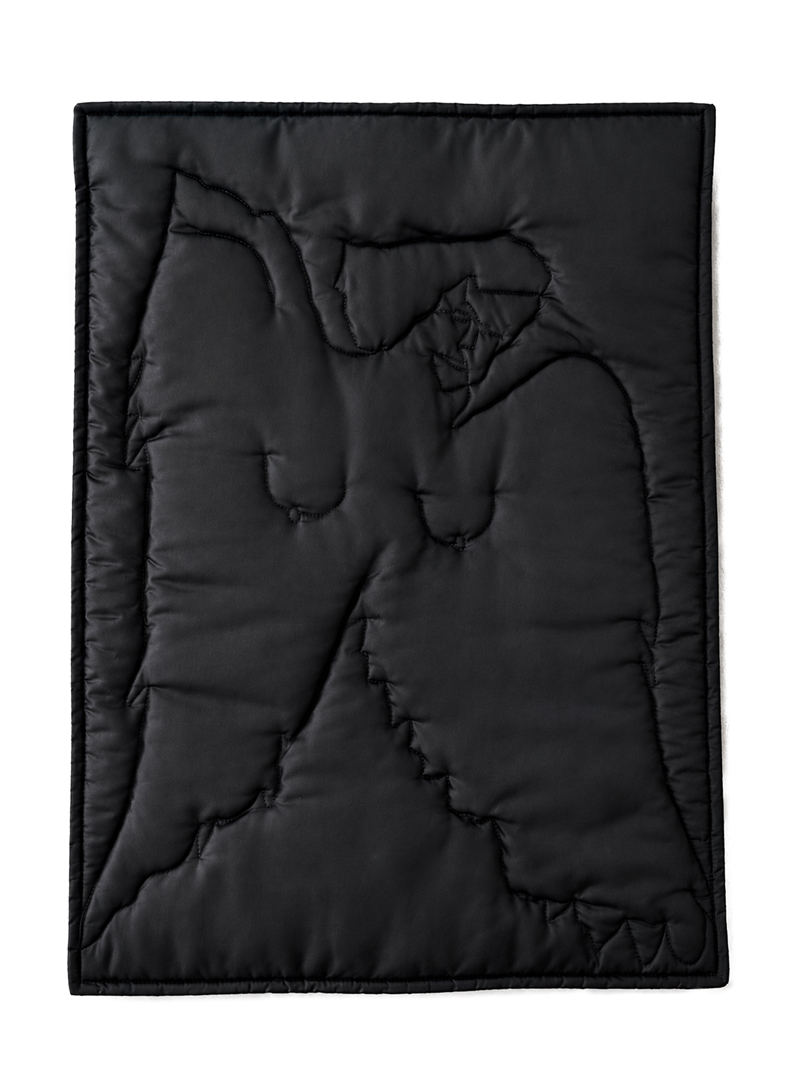
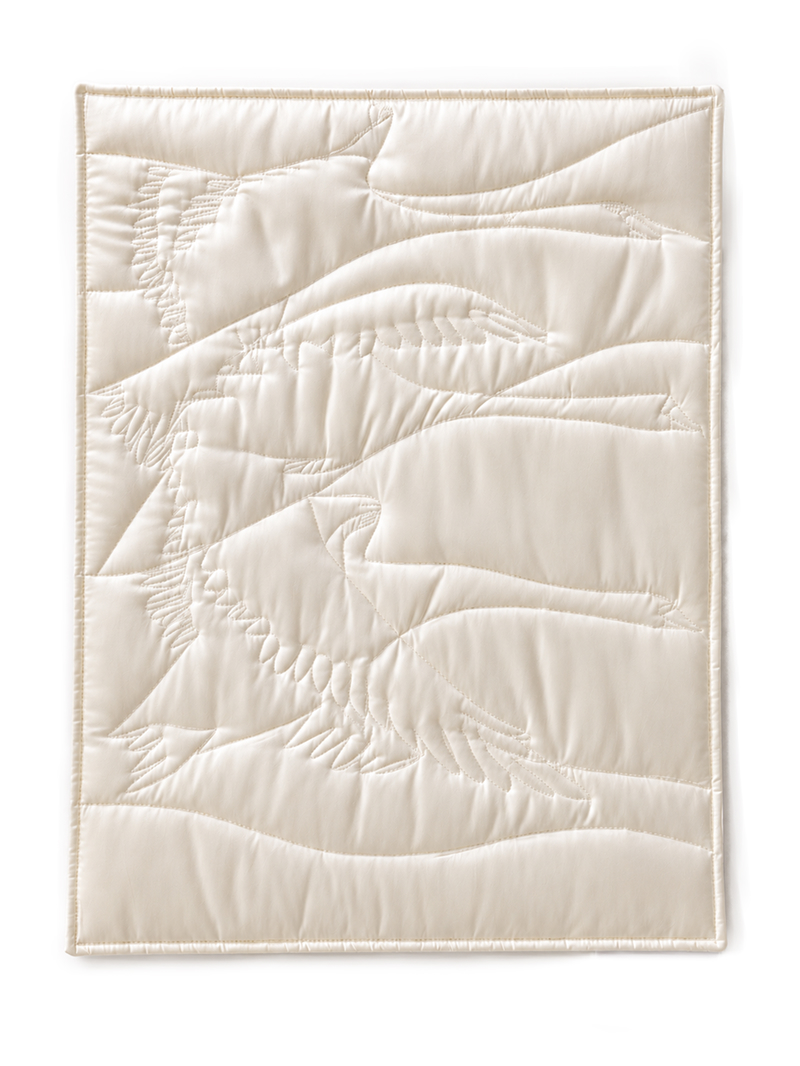
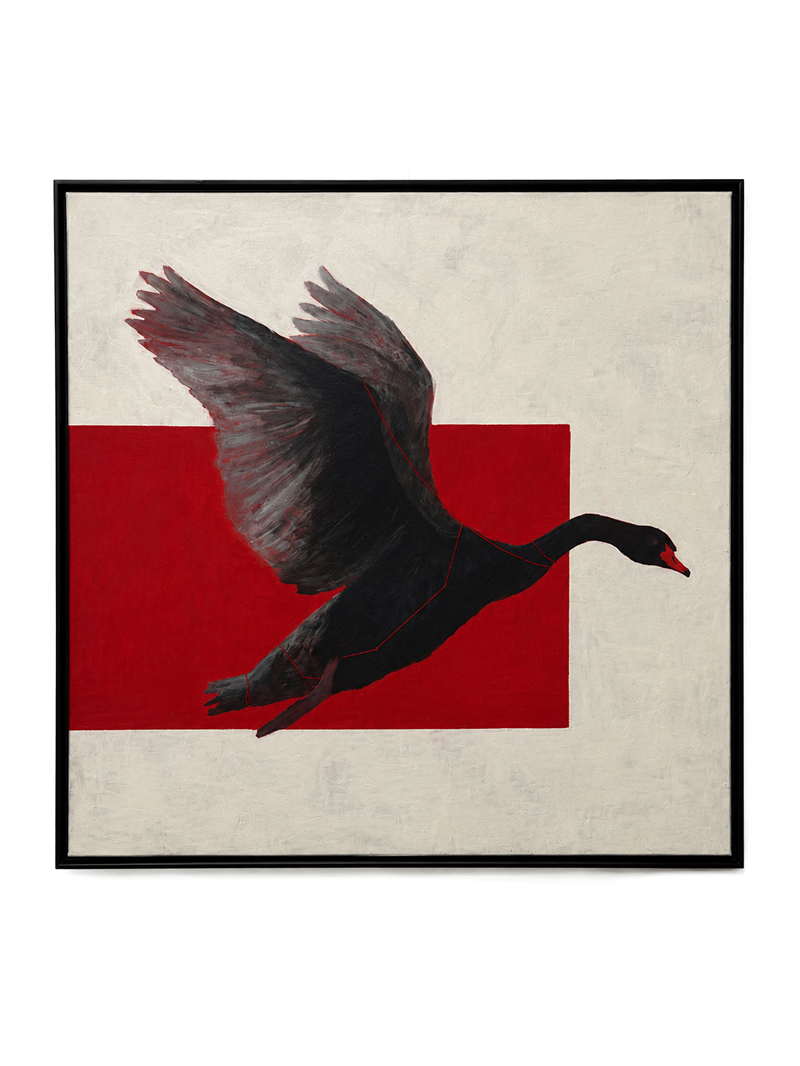
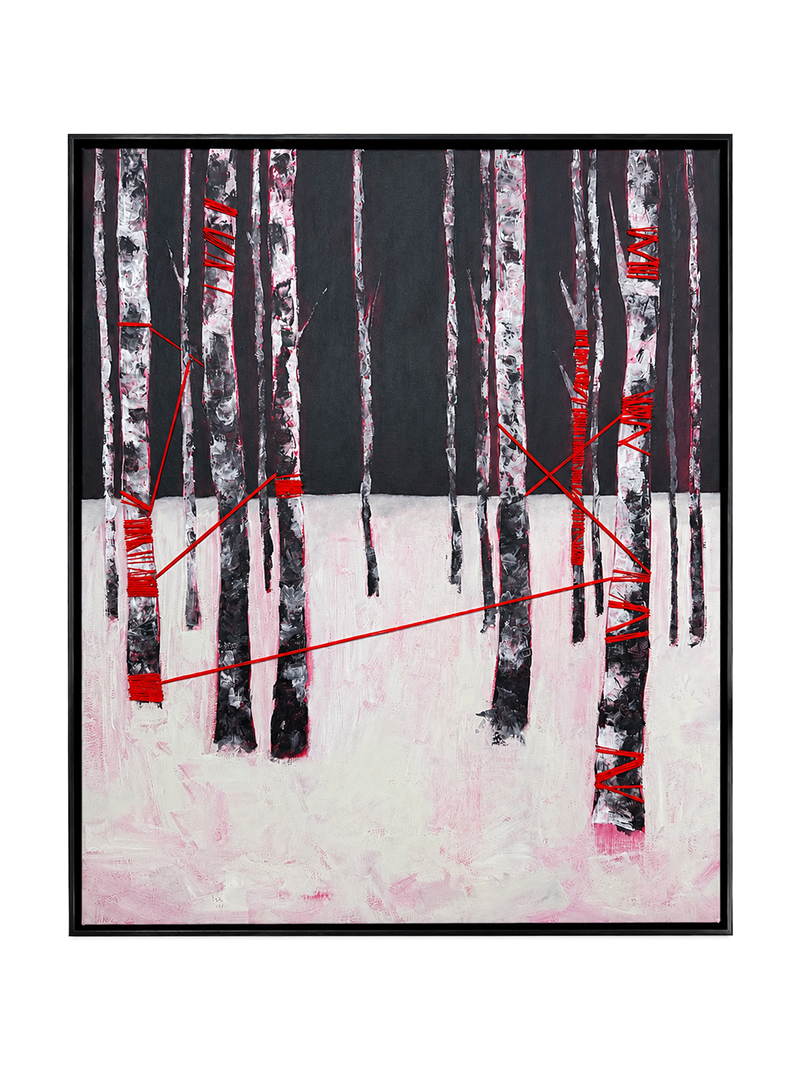
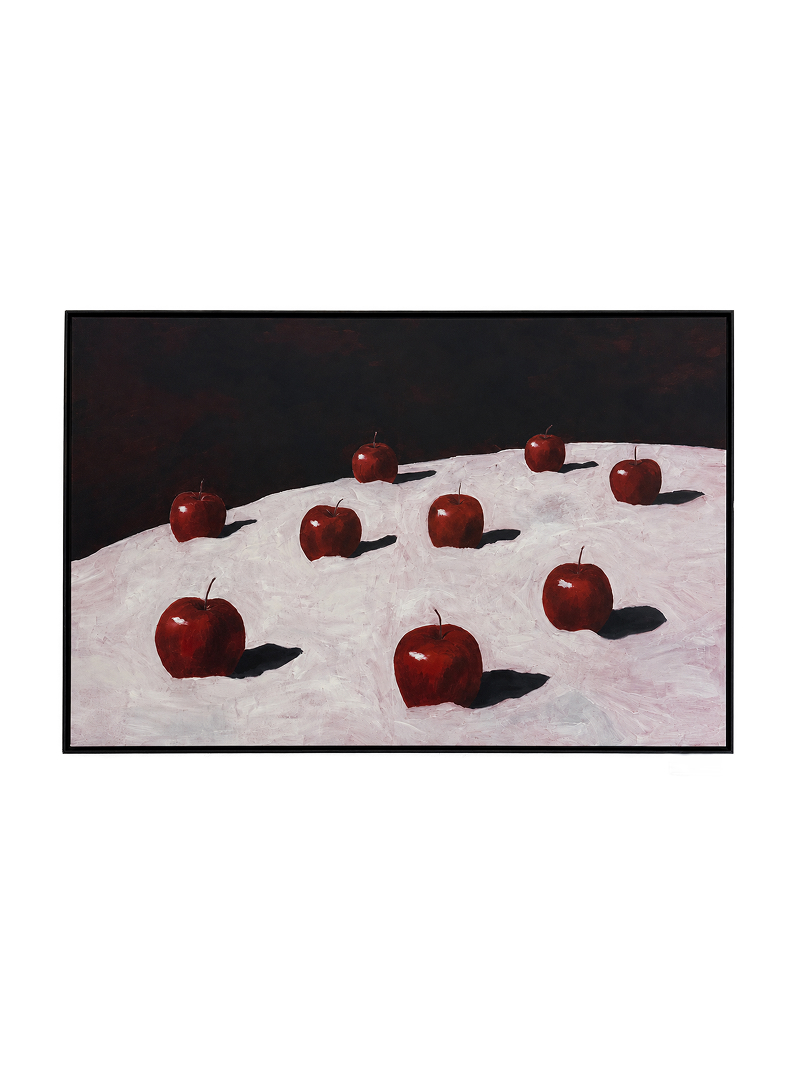
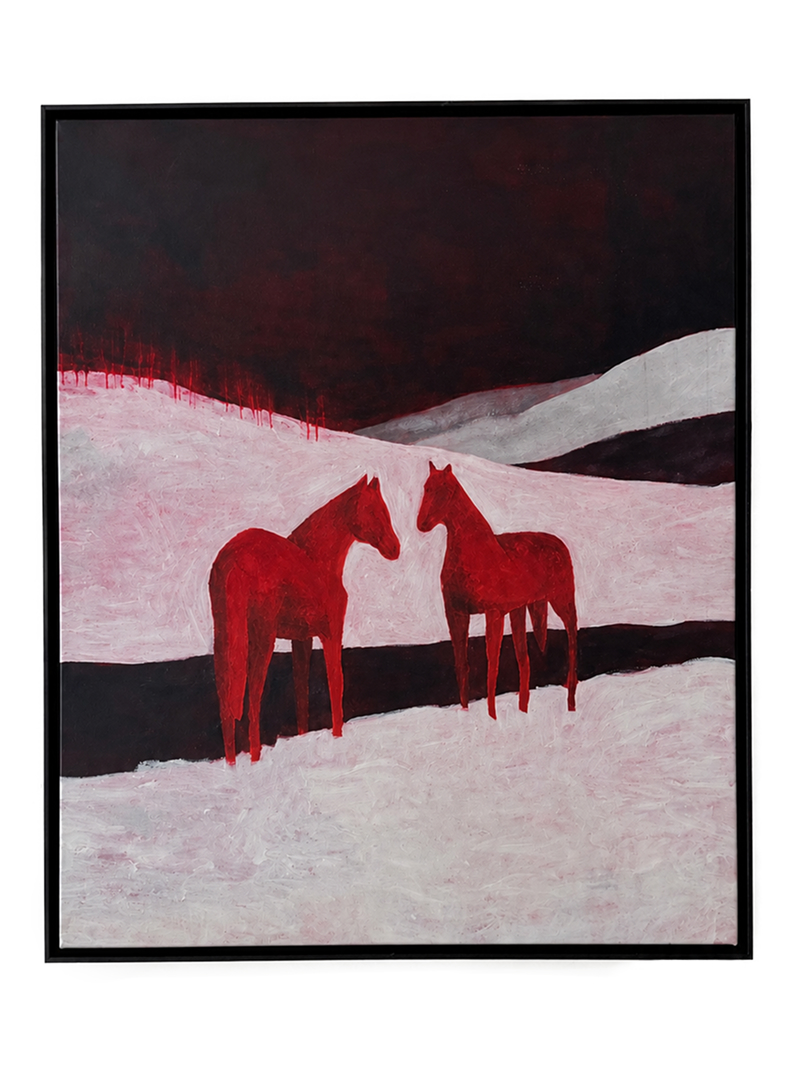
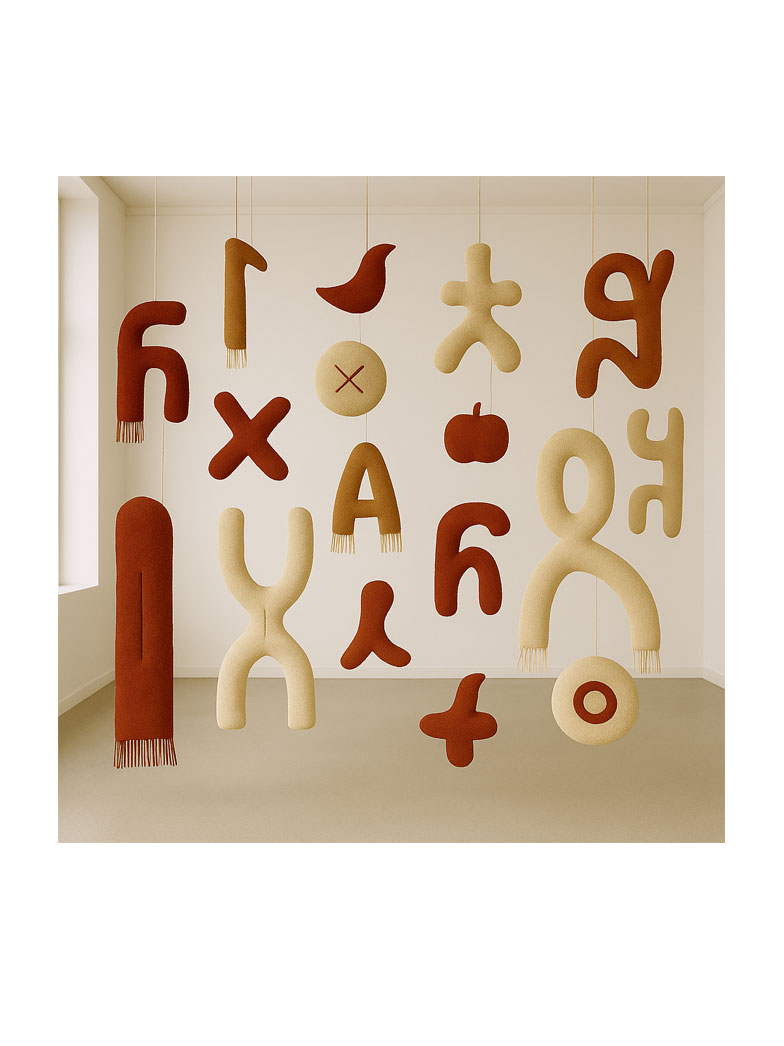
In Imagined Language, Lisbon-based artist Daria Muhina creates a visual alphabet for moments when words are no longer enough. Drawing on memory, folklore, and private mythology, she replaces letters with invented glyphs, tactile marks, and recurring motifs such as the apple, the bird, and the rune. Painting, embroidery, and textiles intertwine into a language of belonging that resists grammar yet speaks through emotion and bodily resonance.
The installation Translation extends this system into space: suspended textile forms echo painted symbols, inviting viewers to walk among them. Here signs transform from flat marks into spatial bodies, becoming characters for dialogue and interpretation.
Muhina’s practice blends painting, embroidery, collage, and textile interventions, often inspired by Slavic motifs and fairy tales. She explores childhood perception, ancestral memory, and the search for identity — weaving the personal with the collective, and using art as a way to sense the invisible and translate the inner into the shared.
Imagined Language was presented as a duo exhibition at Art Gallery Nika, Málaga, in 2025.
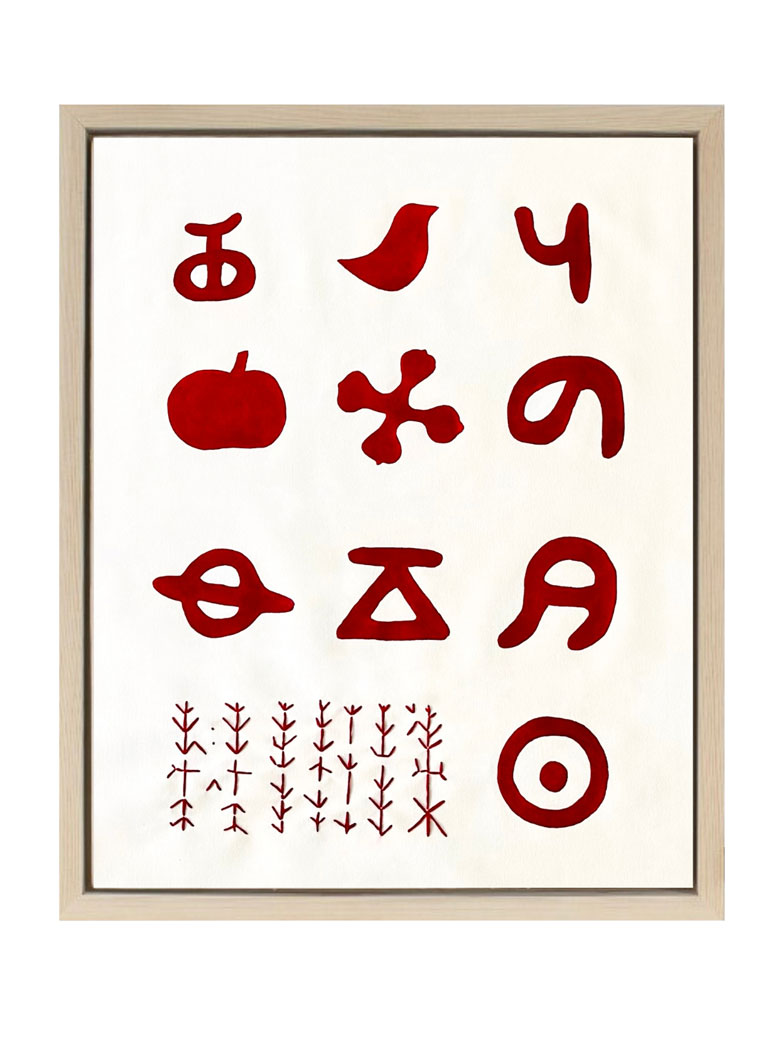
Search for Identity
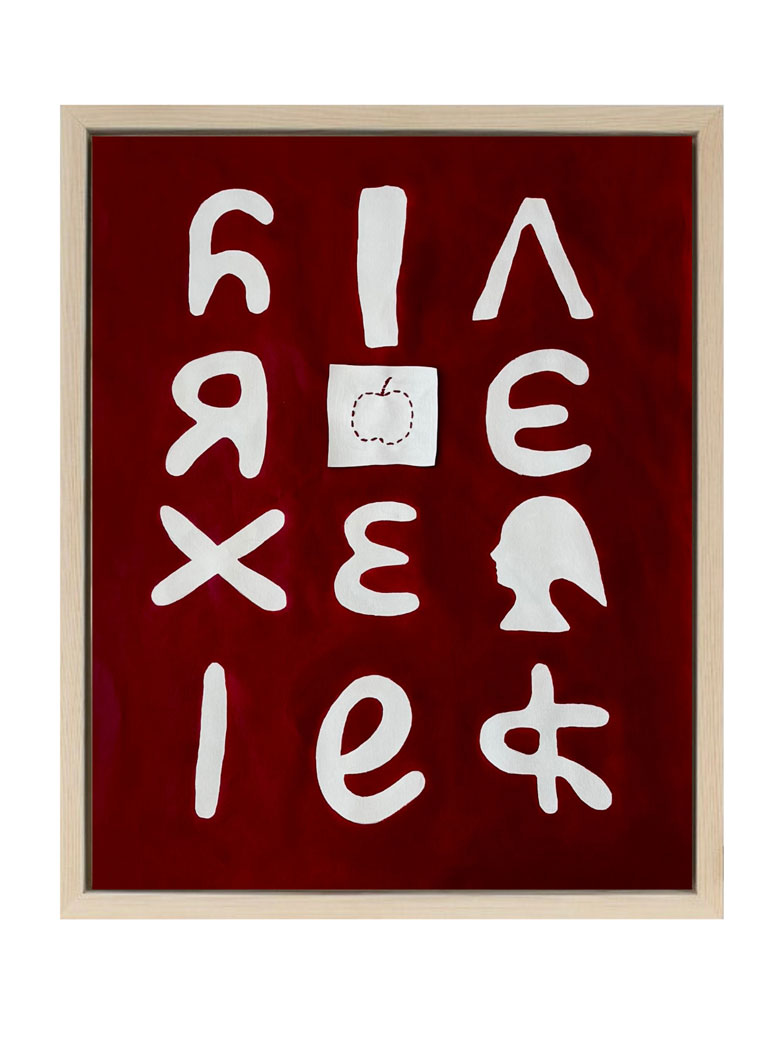
Imagination as Home
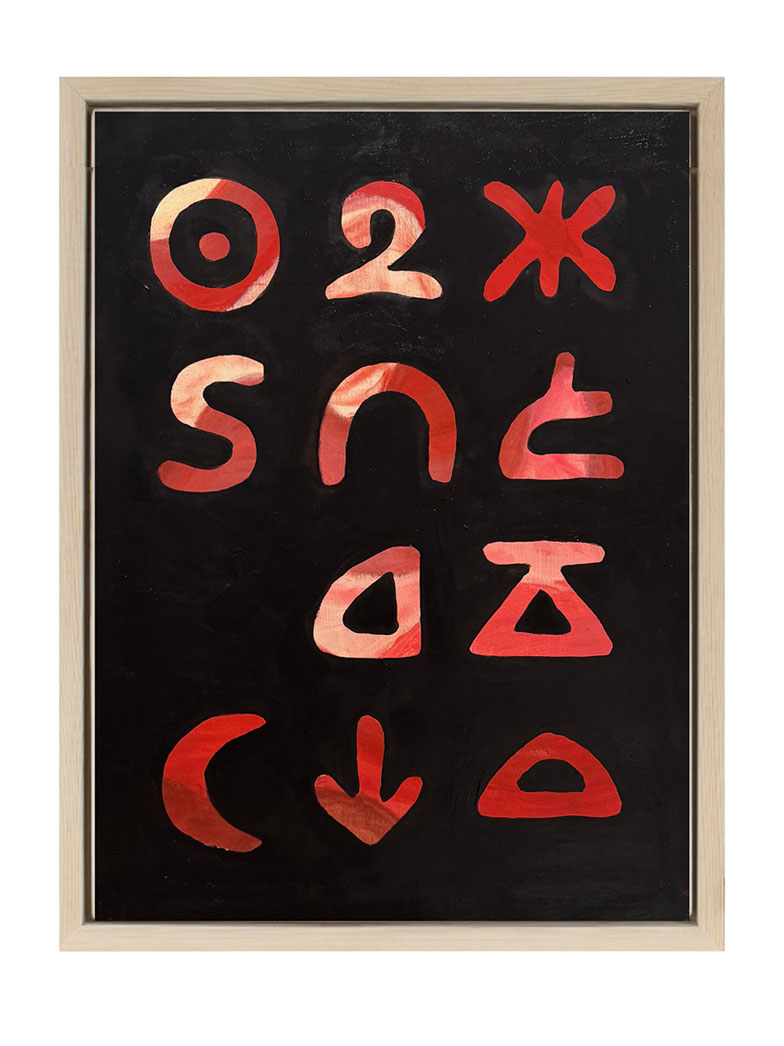
Dreaming in Symbols
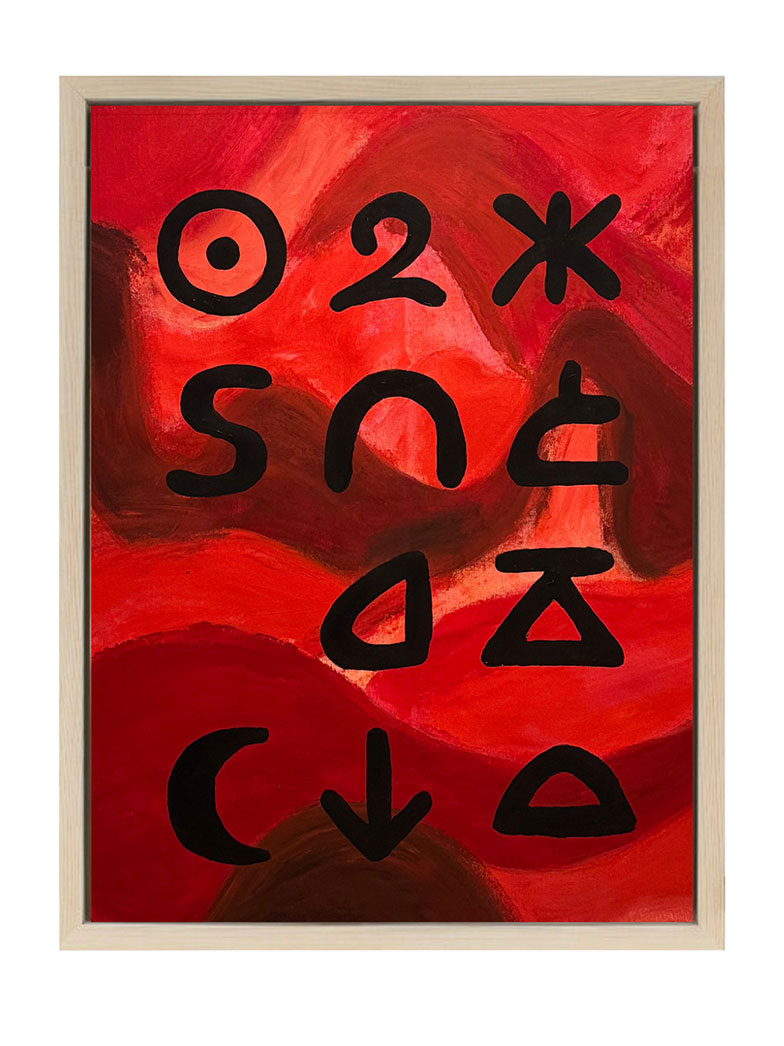
Language as Landscape
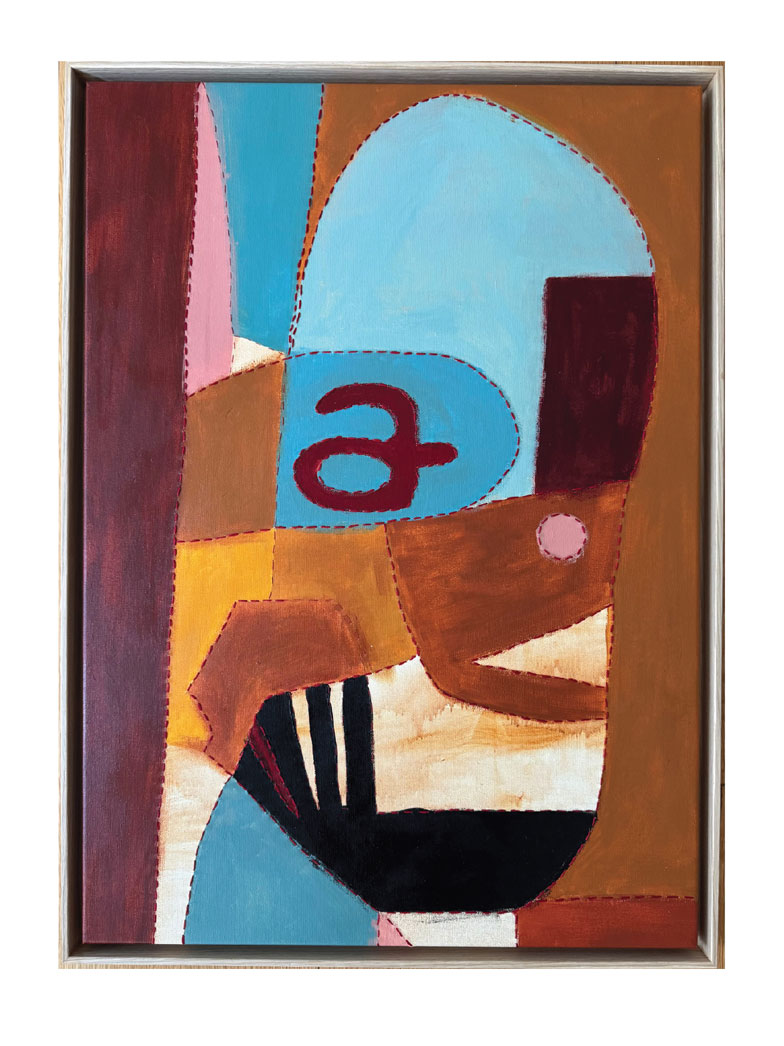
Language as Flesh
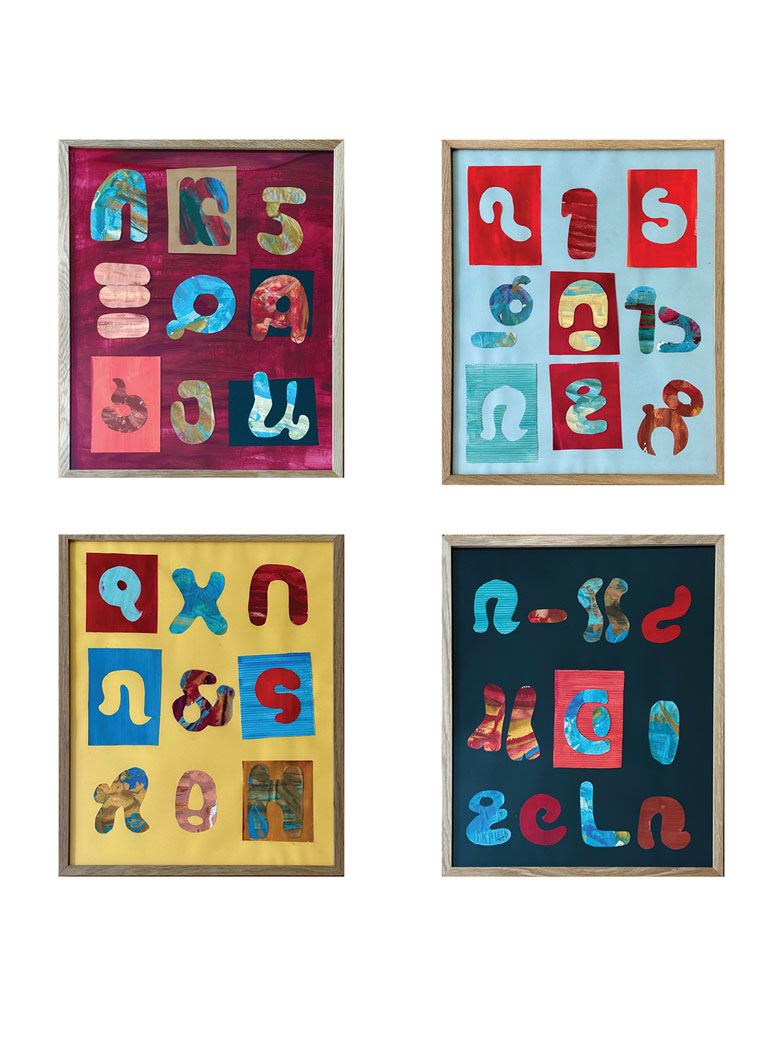
Fragments of Language • Pages I–IV
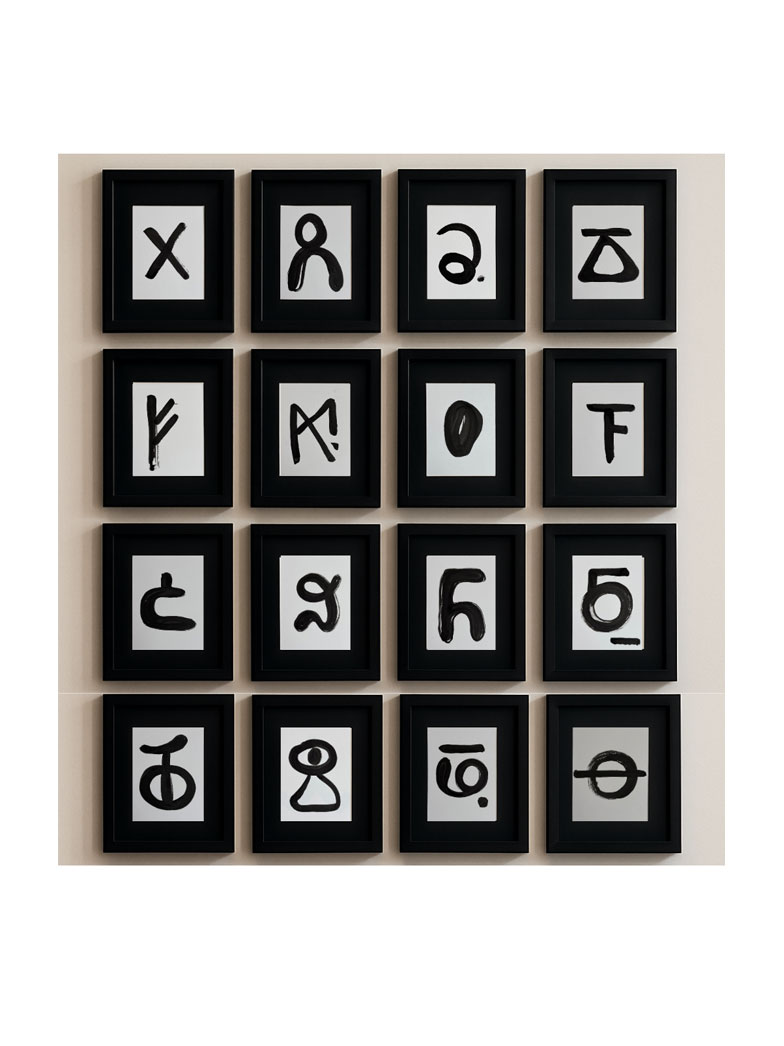
Black on White
Language in Space
Collage, painting, embroidery
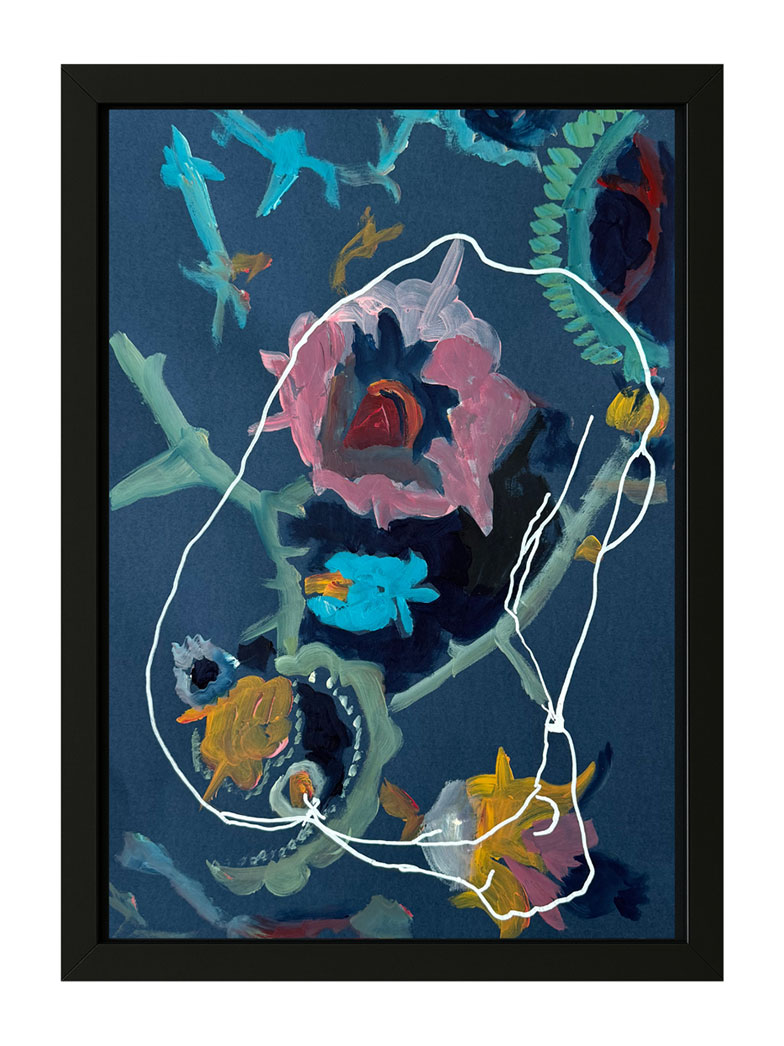
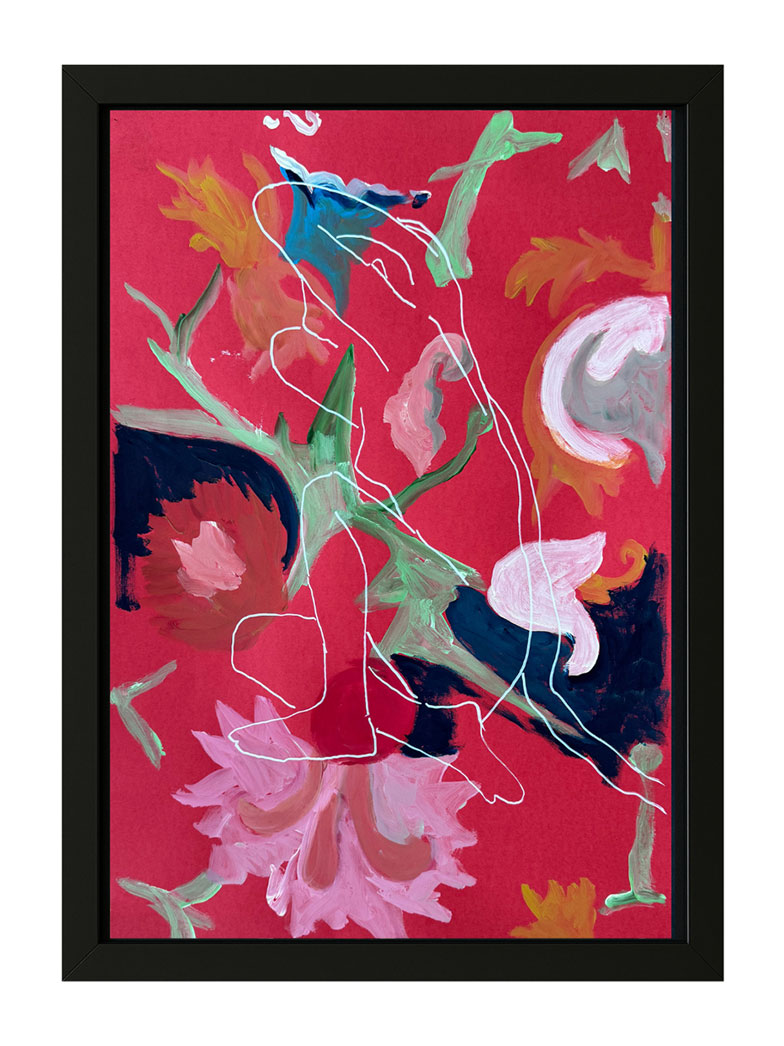
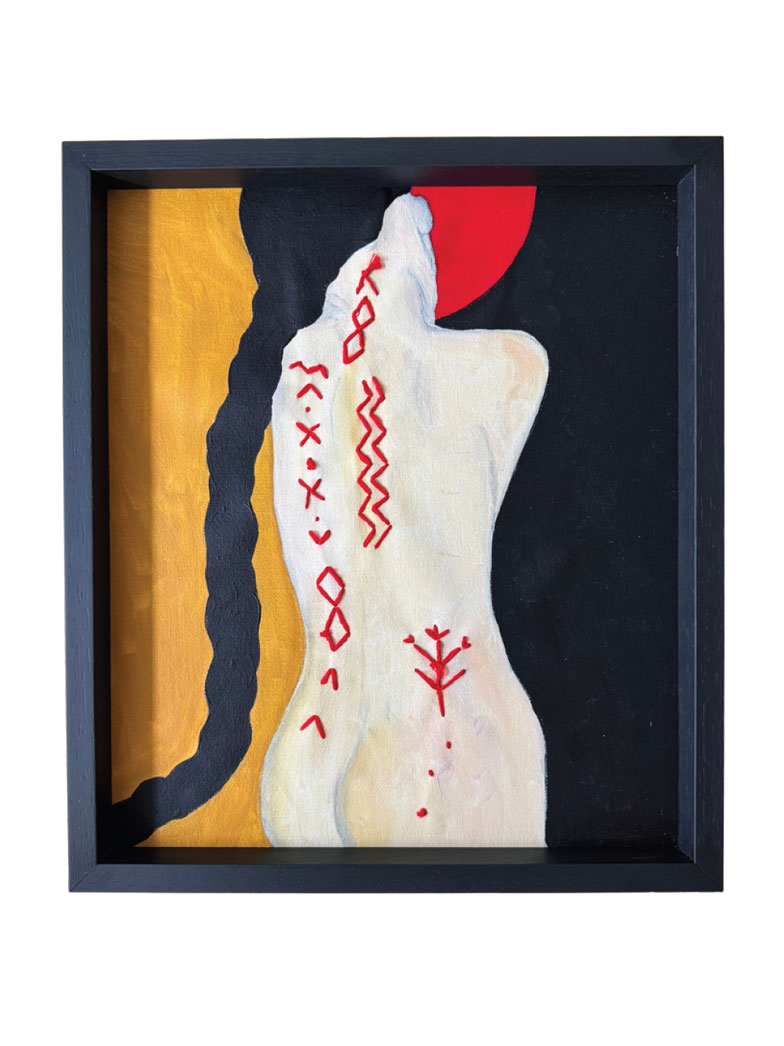
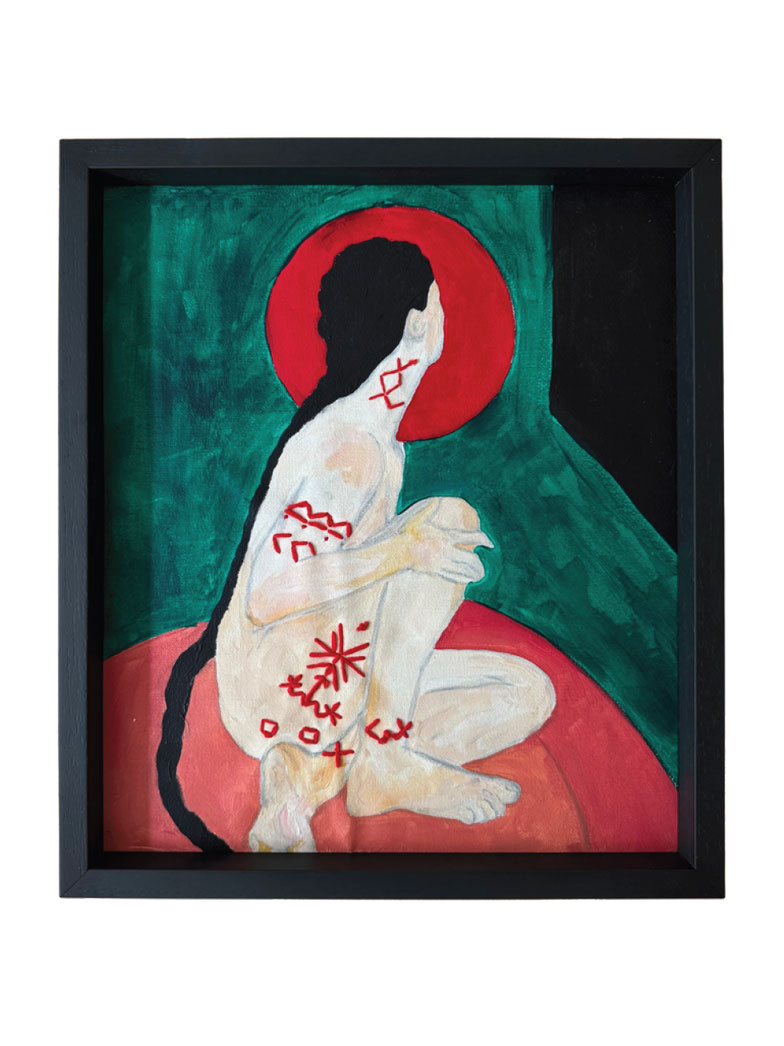
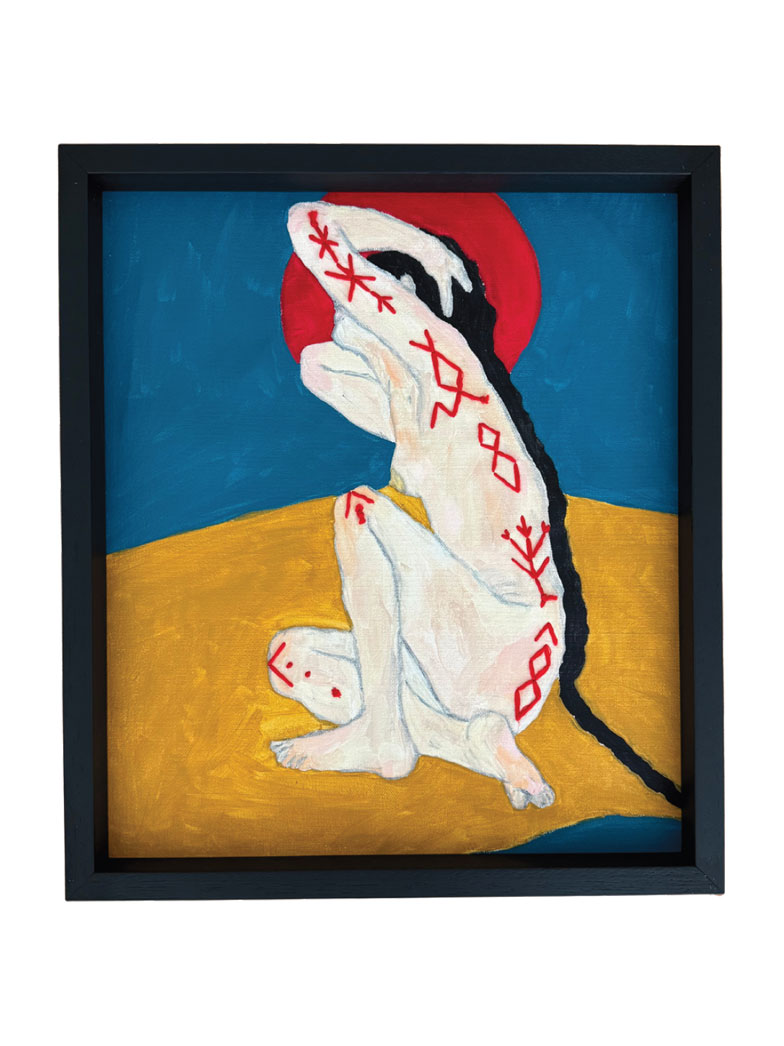
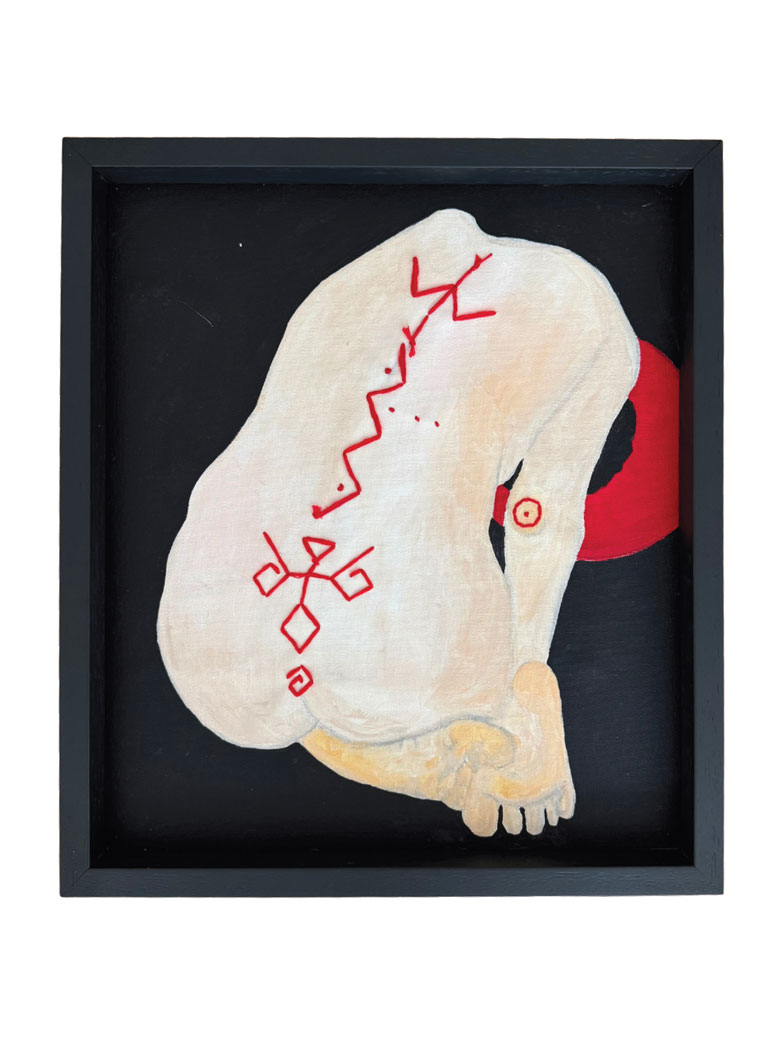
These flowers are inspired by Boretskaya folk painting, where they symbolize the Tree of Life. They are not just decorative elements, but structures encoded with a worldview and a way of perceiving life. The flower's traditional appearance is transformed — just as our modern life has changed. Yet, even after this transformation, the image remains recognizable. The flower becomes a metaphor for the visual, mental, spiritual, and genetic codes we carry.
“Blooming” is not about spring. It’s about revealing the inner self in the moment when what was growing inside finally comes to the surface — in the body, in the voice, in creation. It can be beautiful or painful. A woman lives, grows, and falls apart within a female body.
When the body is not depicted, it is embedded with meaning. The female body and the flower share a vulnerable center — from which everything grows. There’s a shell, a root, and a capacity to expand or to close.
The embroidered bodies: sometimes a scar, sometimes a shield, sometimes an attempt to regain control. The red thread is pain, healing, and ancestral memory. In Russian, “Oberég” is a noun derived from the verb ‘to protect’, and as in these works, it can be embroidered, woven, spoken, or made from natural materials. As an attempt to listen to nature — within the self, within the body, and within ritual — these works connect woman and nature not through fragility, but through cycles. The ability to renew, to enter silence, to die, to be reborn, and to continue is our soft power.
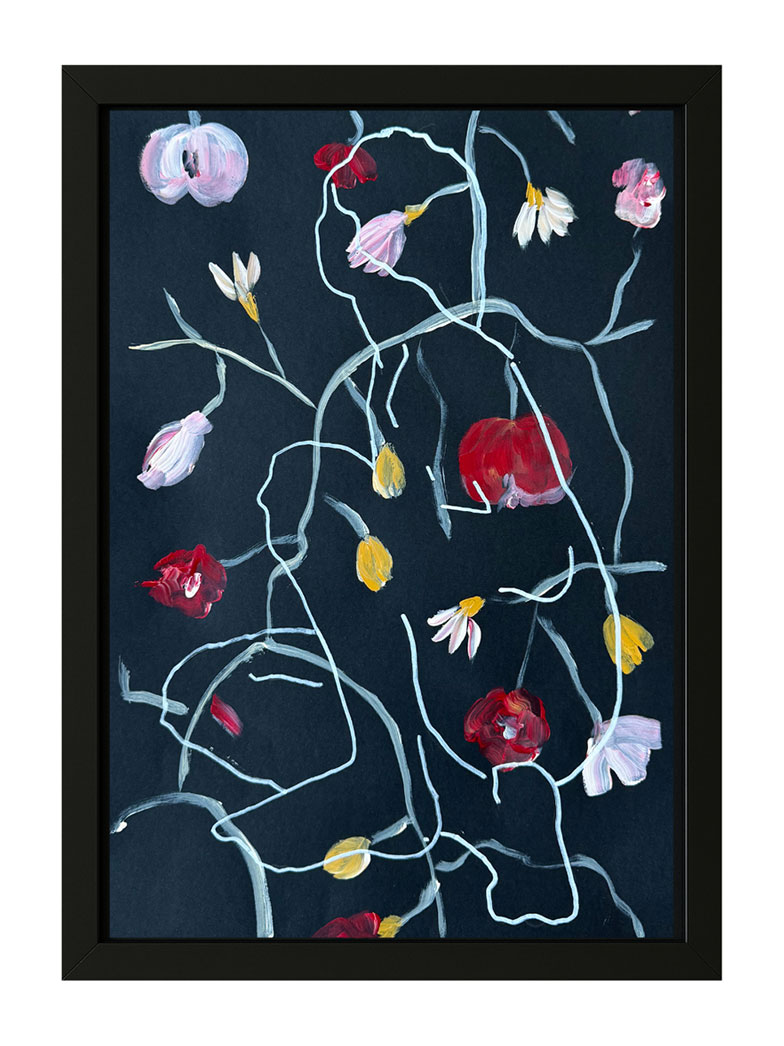
Black and white, as the elements providing contrast, allows this series to focus on form, rhythm, texture. The absence of colour removes visual noise and brings forward the tension between emptiness and filled space. The represented birds, eggs, and nests do not carry a fixed symbolic meaning. Rather, they are visual motifs that emerged from observing reality in the context of the Natural History Museum in Lisbon, Portugal. The series explores how shapes and fragments of the surrounding world can be transformed through artistic gestures and serve as a basis for experimenting with perception within the space of the paper.
Using an intuitive and open process during a residency at MUHNAC, collage has been combined with found materials, monotype printing, ink, and direct gestural marks. Often, the work began with a single cut-out or line and developed freely from there. Room is left for chance and imperfection, reflecting themes of fragmentation, reconstruction, and the balance between control and accident.
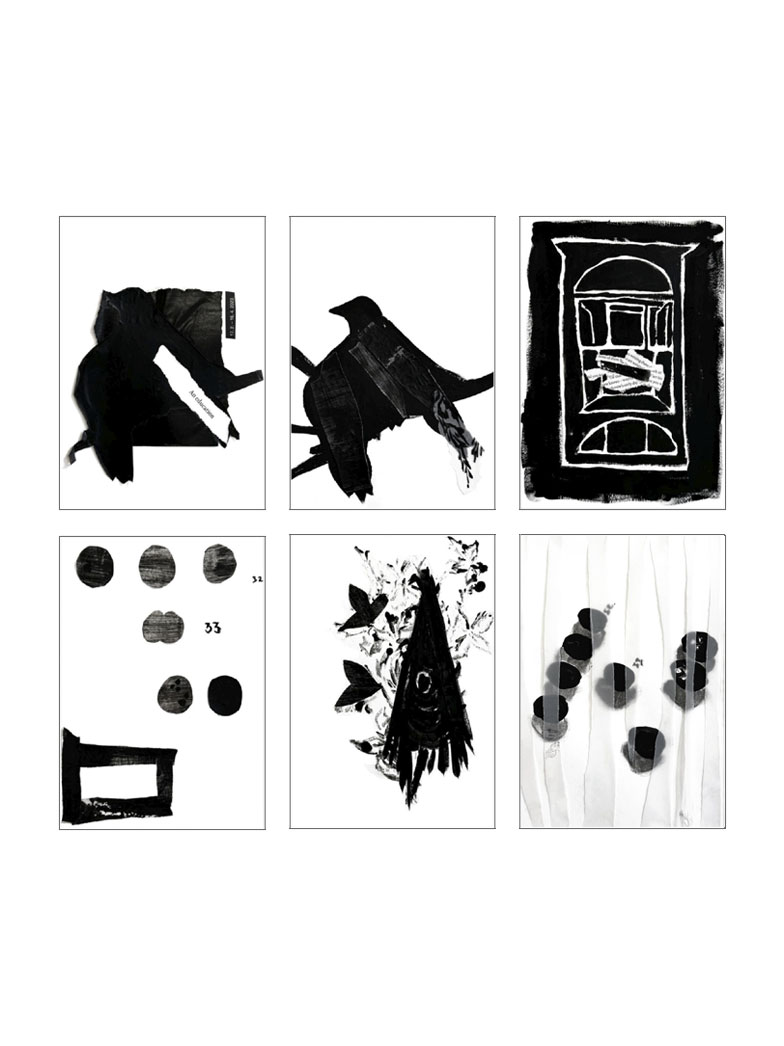
MUHNAC Art Residency
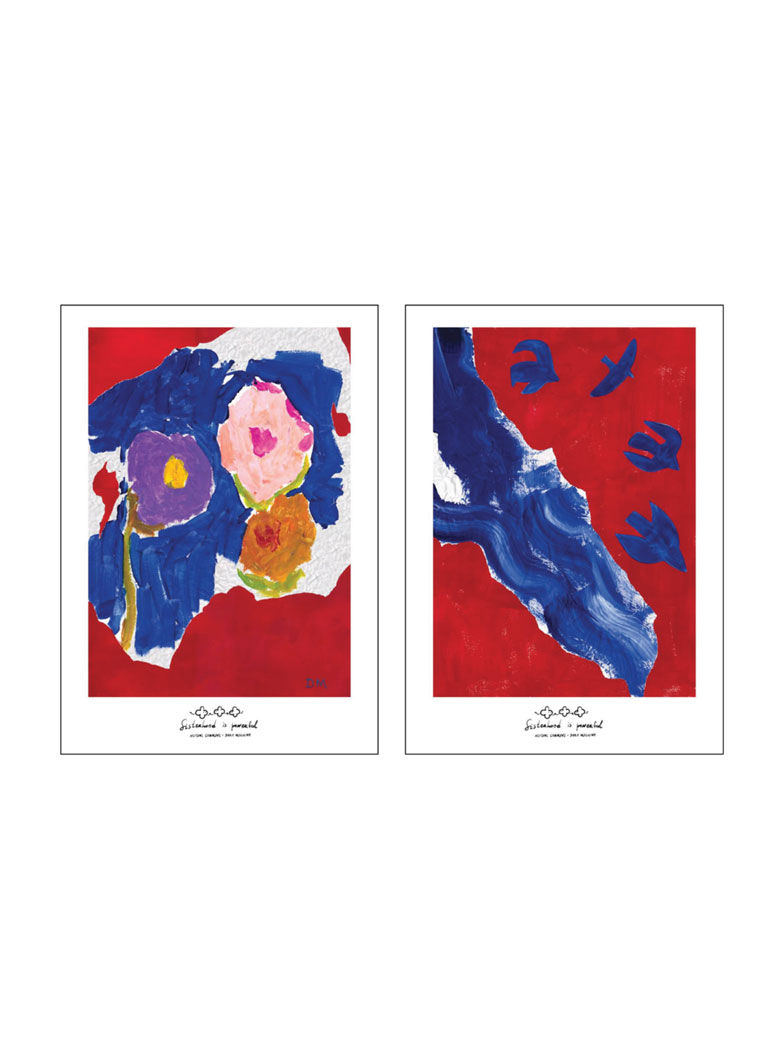
Dialoguing with the brand, the artist created a series of hand-painted works using bold colours and naive, energetic forms. The final prints were adapted for a limited edition release for the 8th of March, designed as objects that could be given as gifts or kept as a symbol of solidarity.
These collaborations are important because they allow art to move beyond gallery spaces and become part of people’s daily lives. It is a way to share values, to find new ways of connecting with audiences, and to create objects that carry not only visual impact but also a message of support, unity, and meaning.